What to do when a BBC reporter direct messages you or any reporter for that matter.
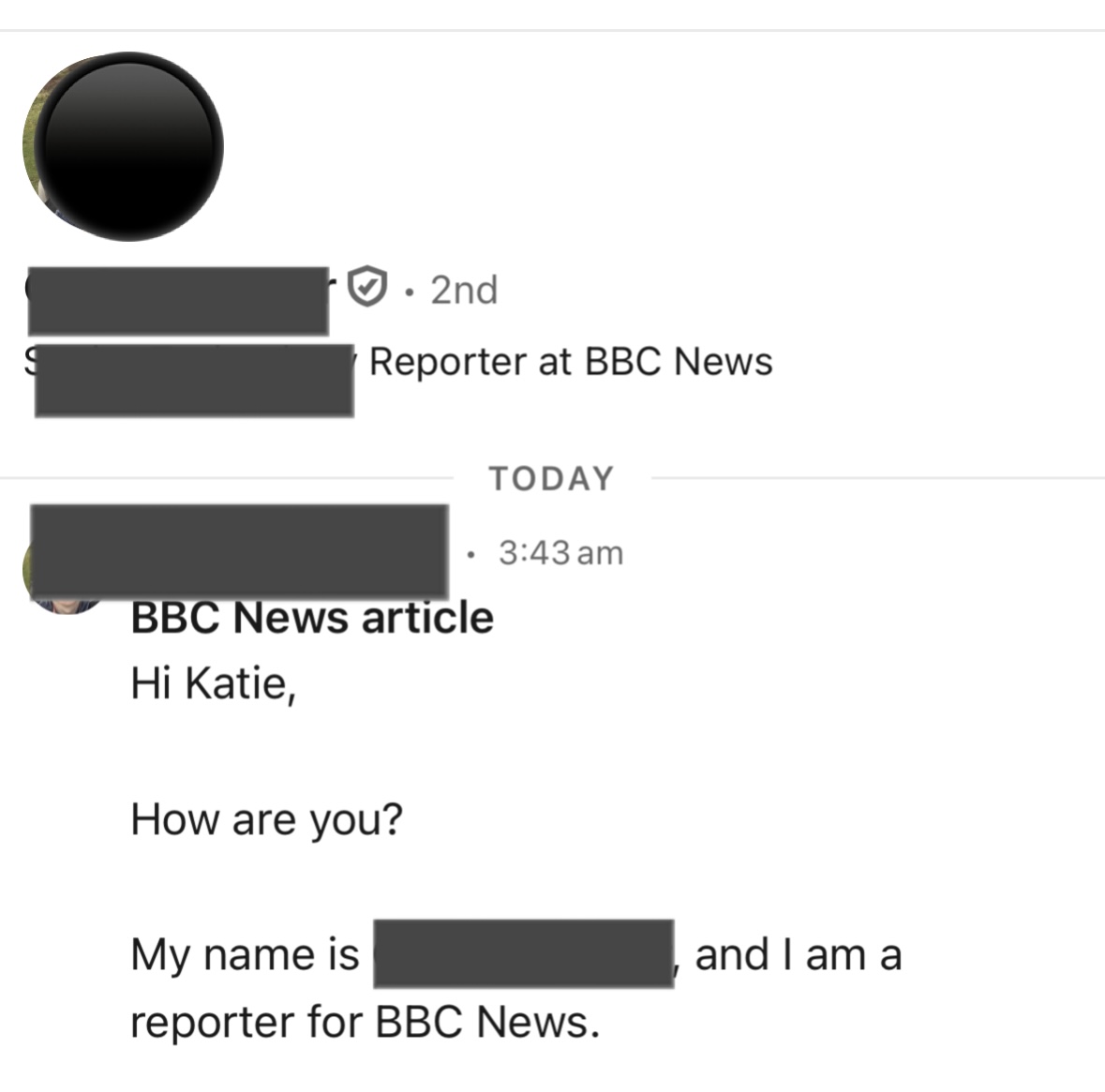
I woke up last Friday morning to a message from a BBC technology reporter on LinkedIn. This is the second time I’ve received an out-of-the-blue media inquiry from a BBC journalist. I get these requests simply because I put myself out there. I’ve built up my personal brand on social media platforms to a point where journalists can find me, vet me, and can easily contact me. You can do this too!
If you’re not familiar with how the news works, here are the key steps to remember in case this happens to you too.
- Most importantly, verify that it’s legit and that they are who they say they are. We’re talking about the internet here and there are scams galore. Do your due diligence, poke around online and make sure it’s a message from a credible source.
- Decide if the story they’re reaching out about is one you want to comment on, but do so quickly.
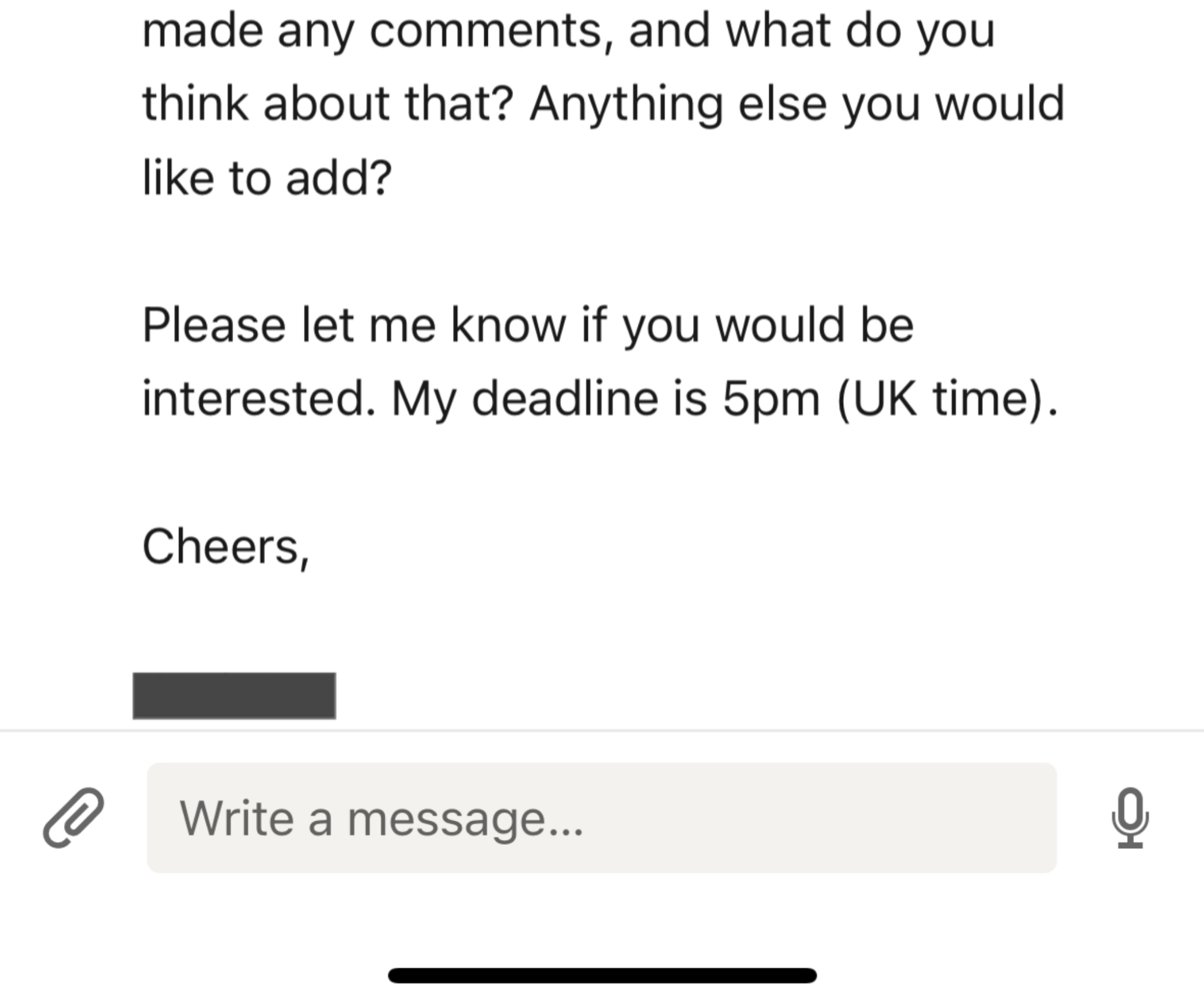
- From their initial communication with you, determine what they’re asking for – a live interview, a quote or quotes, or a recording of you. When a news outlet reaches out to ask if you’d like to be involved in a story they’re working on it could be for a print/digital publication where they need a quote so you only need to provide written text, or the ask could be for a recorded taping where they either need to get video of them interviewing you (in-person or on Zoom) or you send in a video or audio (I sent an audio file that I recorded of myself for my last BBC interview) of yourself and it will be put into the full story’s package used later, or they need you for a live broadcast either on the radio or broadcast news and you need to be camera ready.
- Respond quickly because it is very common for journalists to reach out to as many people as they can to try to maximize the opportunity for replies especially if they’re on a tight deadline. In this instance as you see in the first screenshot, the article was to go live almost twelve hours after the reporter sent me a message.
- In your response, make it incredibly easy for the reporter. Give them everything they could possibly need so either no additional back and forth is needed or only one more response from them is needed. This means that if you are needed for a quote, respond with your quote, your full name, your title, the link to the website they can hyperlink to in the article, a headshot, and anything else that you can think of that they could possibly use in that article. It is very common to send all of this information and then not hear from the journalist until after the article is live and you’re still waiting around to know if you’ll be included or not. And if they’re initially asking to coordinate a live or recorded interview, respond back with your number and email address and answer when the unknown number calls you. They do not have time to play phone tag and they’ll simply move on to the next interviewee.
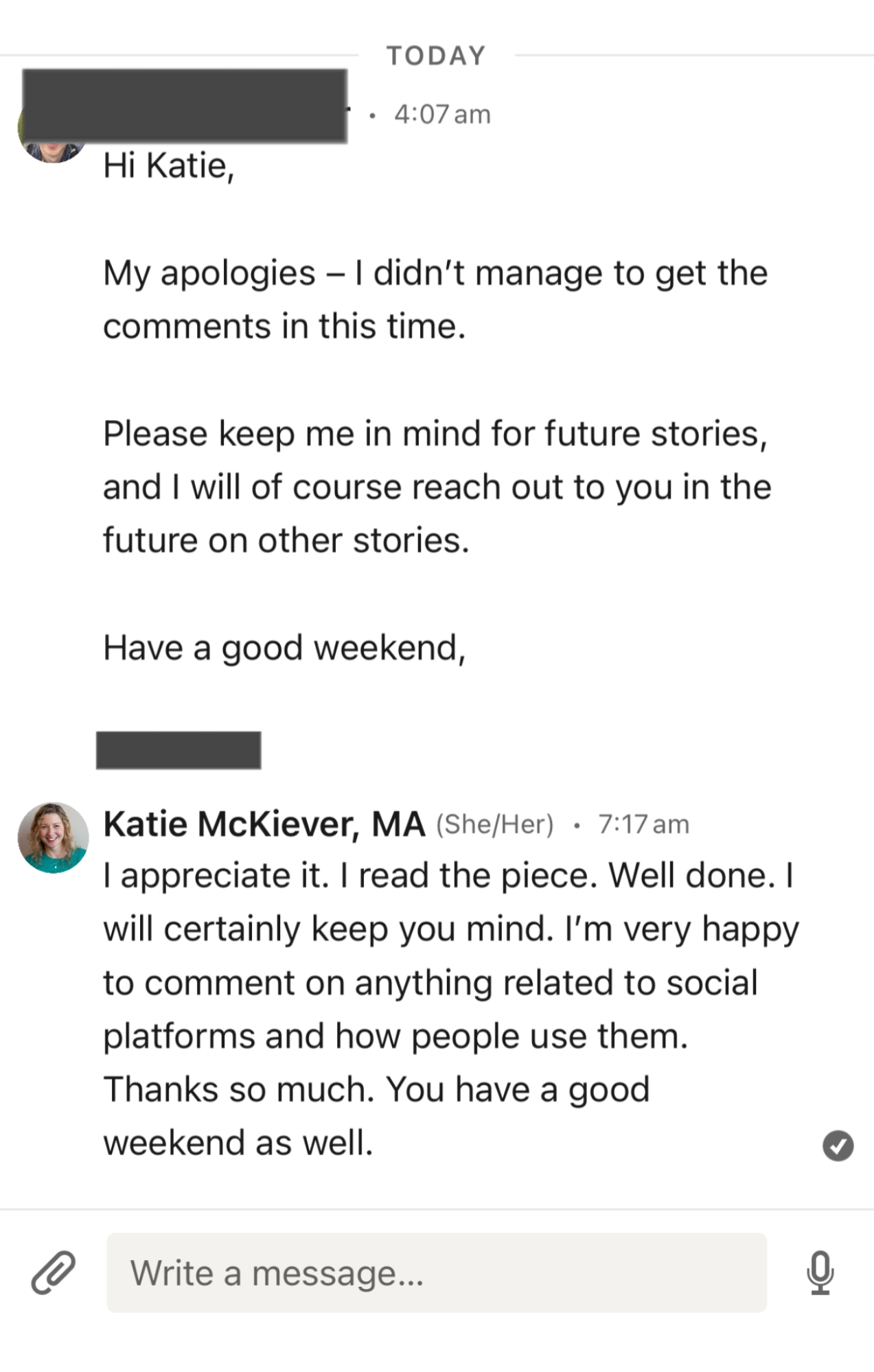
- After the piece goes live, respond to the journalist and let them know that you’re saving their contact information and for them to do the same and that you’re happy to be a source for any future stories they’re doing on XYZ topics.
Note: the second screenshot below is the following day after I had sent my quote and all of my information and hadn’t heard back from the reporter.
THE SCOOP
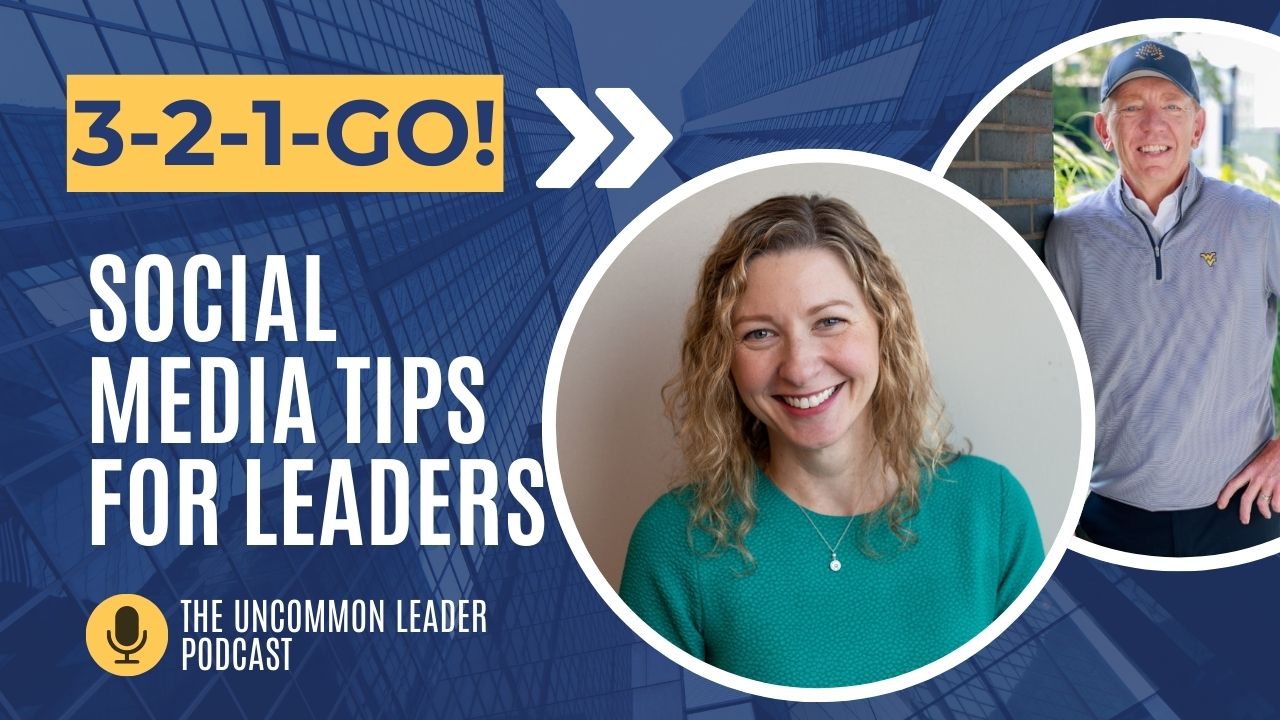
Listen to the recent episode of The Uncommon Leader Podcast with John Gallagher where we discuss how to build thought leadership and my 3-2-1 G.O Framework which gives you simple steps to do that.

FACEBOOK: I could see Meta pulling this off.
- Facebook is banking on creators to entice Gen Z. Will it work? [Marketing Brew]
LINKEDIN: “…video is now the fastest growing format on LinkedIn.”
LINKEDIN: LinkedIn recommends keeping posts short at 150 characters or fewer.
META: It’s wild to me how integral music has become with social media platforms and the need for these partnerships. Remnants of MySpace’s influence continue to exist.
- Universal Music Announces New Licensing Deal with Meta [SocialMediaToday]
SOCIAL MEDIA: I wholeheartedly agree on Sprout Social’s 7 tips to manage your brand’s reputation on social media.
- Social media risk management: Expert tips to lower risk [Sprout Social]
X: This is an easy-to-digest breakdown of the lawsuit.
BUSINESS BONUS
BRANDING: Media opportunities and newsrooms continue to shrink. Build your personal brand.
 Katie McKiever
Leave a comment